Table Of Content

This formula can help you crunch the numbers to see how much house you can afford. Alternatively, you can use this mortgage calculator to help determine your budget. Homeowners in some developments and townhome or condominium communities pay monthly Homeowner's Association (HOA) fees to collectively pay for amenities, maintenance and some insurance. Mortgage interest is the cost you pay your lender each year to borrow their money, expressed as a percentage rate.

Terms explained
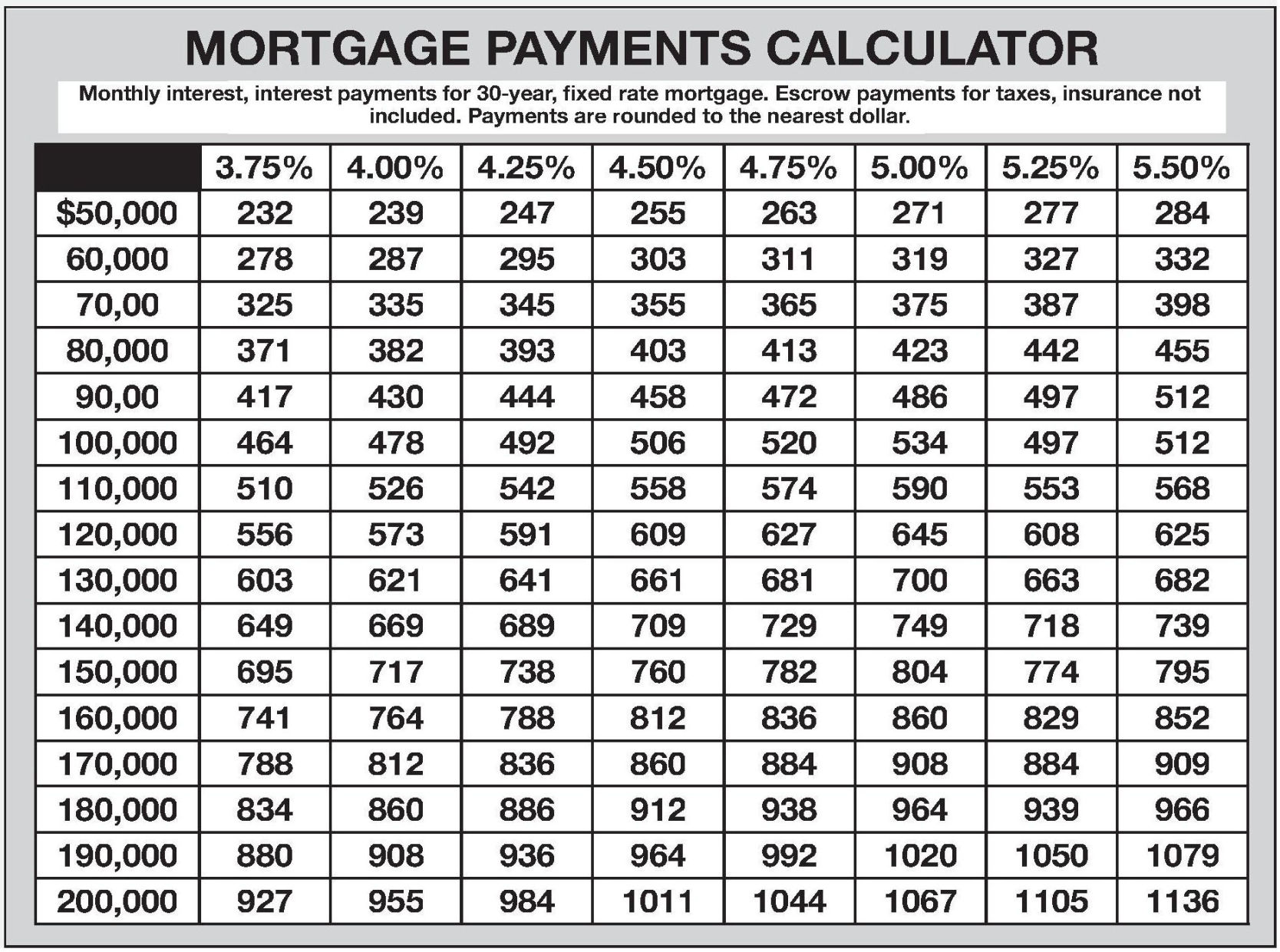
There are several types of home loans, but which one is right for you will depend entirely on what you qualify for and what ultimately makes the most sense for your financial situation. List out your expenses and then add them together to get your total monthly spending. Naturally, the lower your interest rate, the lower your monthly payment will be. Want a quick way to determine how much house you can afford on a $40,000 household income?
Why it’s smart to follow the 28/36% rule
Loans, grants, and gifts are three ways to supplement your savings for a down payment. A lender is a financial institution that provides a loan directly to you. Our partners cannot pay us to guarantee favorable reviews of their products or services. We'll help you estimate how much you can afford to spend on a home. Many or all of the products featured here are from our partners who compensate us. This influences which products we write about and where and how the product appears on a page.
Mortgage Calculators
Jumbo loans allow you to purchase more expensive properties but often require 20% down, which can cost more than $100,000 at closing. A conventional loan is a type of mortgage that is not insured or guaranteed by the government. For a mortgage loan, the borrower often is also referred to as the mortgagor (and the bank or lender the mortgagee).
What are the different types of home loans?
Conventional loans are backed by private lenders, like a bank, rather than the federal government and often have strict requirements around credit score and debt-to-income ratios. If you have excellent credit with a 20% down payment, a conventional loan may be a great option, as it usually offers lower interest rates without private mortgage insurance (PMI). You can still obtain a conventional loan with less than a 20% down payment, but PMI will be required. Mortgage insurance protects the mortgage lender against loss if a borrower defaults on a loan.
VA loan (government loan)
While we adhere to stricteditorial integrity,this post may contain references to products from our partners. In addition, the calculator allows you to input extra payments (under the “Amortization” tab). This can help you decide whether to prepay your mortgage and by how much.
Get a more accurate estimate
The APR is calculated according to federal requirements and is required by law to be stated in all home mortgage estimates. This allows you to better compare how much mortgage you can afford from different lenders and to see which is the right one for you. This loan type is specifically designed for families looking to buy homes in rural areas. Similar to the FHA loan, this home loan lets lower-income families become homeowners. The loan does not require a down payment, but you will have to get private mortgage insurance.
Interest rate
How Much House Can I Afford On A $70K Salary? - Bankrate.com
How Much House Can I Afford On A $70K Salary?.
Posted: Wed, 04 Oct 2023 07:00:00 GMT [source]
If your score is 580 or higher, you could put down as little as 3.5 percent. In most areas in 2023, an FHA loan cannot exceed $472,030 for a single-family home. You’ll also need to factor in how mortgage insurance premiums — required on all FHA loans — will impact your payments. Lenders tend to give the lowest rates to borrowers with the highest credit scores, lowest debt and substantial down payments. Loan term (years) - This is the length of the mortgage you're considering. On the other hand, a homeowner who is refinancing may opt for a loan with a shorter repayment period, like 15 years.
Mortgage Calculator
Your loan program can affect your interest rate and total monthly payments. Choose from 30-year fixed, 15-year fixed, and 5-year ARM loan scenarios in the calculator to see examples of how different loan terms mean different monthly payments. Most home loans require at least 3% of the price of the home as a down payment. Although it's a myth that a 20% down payment is required to obtain a loan, keep in mind that the higher your down payment, the lower your monthly payment. A 20% down payment also allows you to avoid paying private mortgage insurance on your loan. You can use Zillow's down payment assistance page and questionnaire tool to surface assistance funds and programs you may qualify for.
Homeowner's insurance is based on the home price, and is expressed as an annual premium. The calculator divides that total by 12 months to adjust your monthly mortgage payment. Average annual premiums usually cost less than 1% of the home price and protect your liability as the property owner and insure against hazards, loss, etc. In order to determine how much mortgage you can afford to pay each month, start by looking at how much you earn each year before taxes.
They do not take into consideration if you want to set aside $250 every month for your retirement or if you’re expecting a baby and want to save additional funds. The 28/36 rule is a broadly accepted starting point for determining home affordability, but you’ll still want to take your entire financial situation into account when considering how much house you can afford. For more on the types of mortgage loans, see How to Choose the Best Mortgage. Loans backed by the FHA can also have more relaxed qualifying standards — something to consider if you have a lower credit score.
Two benefits to this mortgage loan type are stability and being able to calculate your total interest on your home upfront. As you think about your mortgage payments, it’s important to understand the difference between what you can spend versus what you can spend while still living comfortably and limiting your financial stress. For example, let’s say that you could technically afford to spend $4,000 each month on a mortgage payment. If you only have $500 remaining after covering your other expenses, you’re likely stretching yourself too thin. Remember that there are other major financial goals to consider, too, and you want to live within your means. Just because a lender offers you a preapproval for a large amount of money, that doesn’t mean you should spend that much for your home.
Lenders will also look at your debt-to-income ratio, or DTI, to get a clear picture of how risky it is to loan you money. Simply put, the higher your debt-to-income ratio, the more the lender will doubt your ability to pay the loan back. Lenders have maximum DTIs in place that could stand in the way of getting approved for a mortgage. On conventional loans, for example, lenders usually like to see debt-to-income ratios under 36 percent. Most are willing to go up to 43 percent, and in some cases, 50 percent is the cutoff. If you want to shrink your debt-to-income ratio before applying for a mortgage — which is likely a good idea — pay off your credit cards and other recurring debts, like student loans and car payments.
By using the 28 percent rule, your mortgage payments should add up to no more than 28 percent of $8,333, or $2,333 per month. A jumbo loan is used when the mortgage exceeds the limit for Fannie Mae and Freddie Mac, the government-sponsored enterprises that buy loans from banks. Jumbo loans can be beneficial for buyers looking to finance luxury homes or homes in areas with higher median sale prices. However, interest rates on jumbo loans are much higher because lenders don't have the assurance that Fannie or Freddie will guarantee the purchase of the loans.
Down payment & closing costsNerdWallet's ratings are determined by our editorial team. The scoring formula takes into account the type of card being reviewed (such as cash back, travel or balance transfer) and the card's rates, fees, rewards and other features. Bankrate.com is an independent, advertising-supported publisher and comparison service. We are compensated in exchange for placement of sponsored products and services, or by you clicking on certain links posted on our site. Therefore, this compensation may impact how, where and in what order products appear within listing categories, except where prohibited by law for our mortgage, home equity and other home lending products.